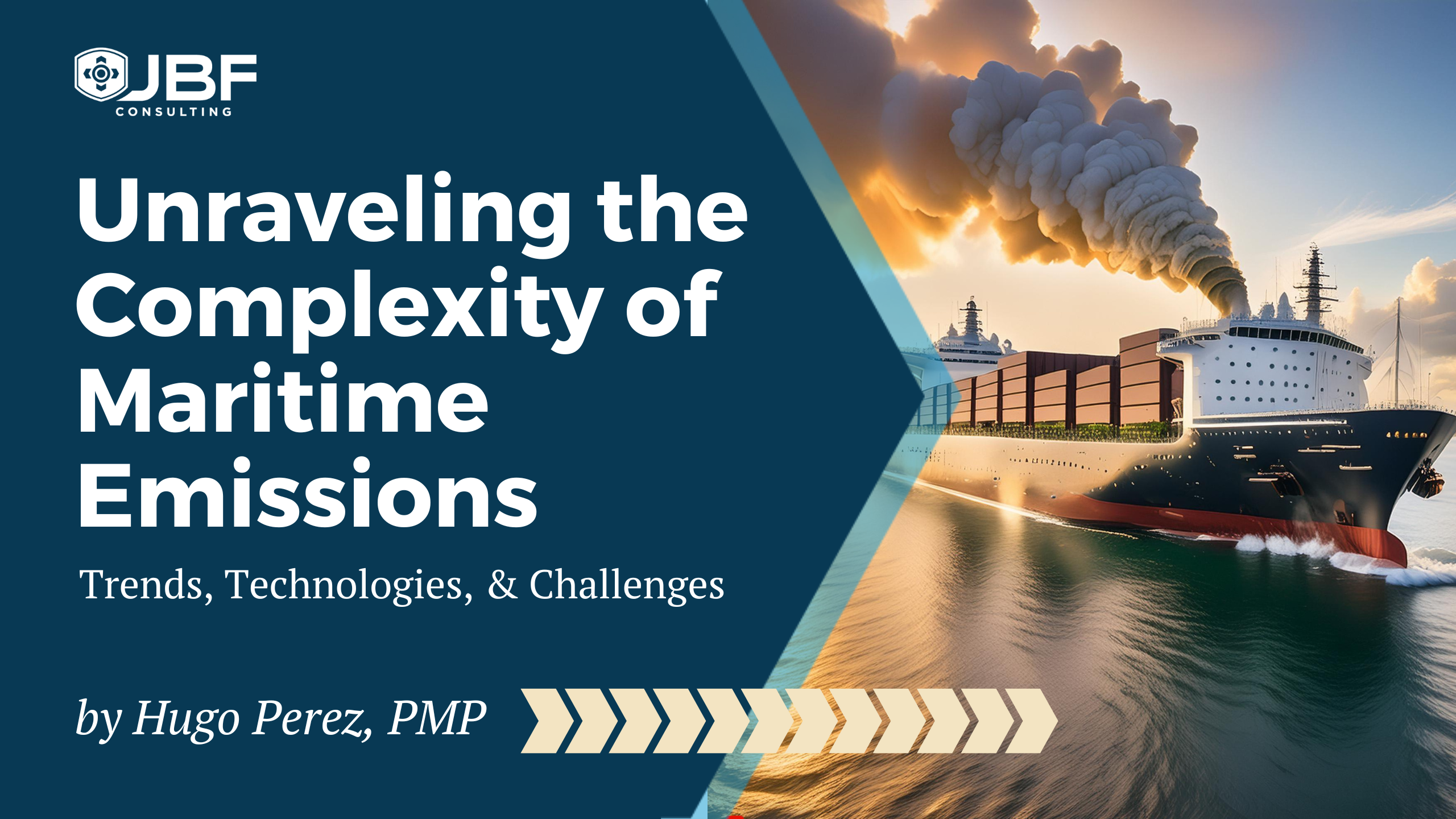
For large shippers, the adaptation to changing maritime routes presents a dual challenge of maintaining operational efficiency and meeting environmental responsibilities.
How Extended Sea Routes are Impacting Emissions for Large Shippers

by Hugo Perez

For large shippers, the adaptation to changing maritime routes presents a dual challenge of maintaining operational efficiency and meeting environmental responsibilities.

Uncover strategic insights on avoiding common pitfalls and maximizing ROI by realizing the full potential of your Transportation Management System (TMS). Discover practical steps for continuous improvement and ensuring your technology adapts to your business needs.

To gain insight into shippers’ genuine experiences with their TMS, JBF Consulting engaged Adrian Gonzales from Adelante SCM to conduct a survey. This survey delved into understanding not just how satisfied users are with their systems but also how these TMS platforms work alongside other technologies and what role AI and machine learning are starting to play in the logistics field.

Find out the four reasons shippers initially purchase a Transportation Management System (TMS) and the three reasons why the planning and optimization capabilities of TMSs are underutilized.

Both UPS and Fedex have substantial overcapacity in their fleets of aircraft. This is not just a matter of their pilot utilization reports but also a concern for air cargo operators and brokers. For now, UPS and FedEx are keeping quiet on their plans, but recent moves indicate that they are trying to adapt to materially lower parcel volumes and opening up space on their fleets could be low-hanging fruit.

Recently, the JBF Consulting team, including myself, Tony Wayda and Mary Wayt , had the opportunity to attend Manifest 2024 in Las Vegas. Here are the key insights that captured our attention.

Increasing use of railroads in moving freight has a moderating effect on volatility. Focusing rail on long distance hauls where it clearly has fuel economy advantages, while getting trucks to do the first and final mile hauling, has the potential to minimize freight supply and demand troughs. A more stable and predictable freight system using both rail and truck means lower operating costs for all.

Brad Forester sits down with Joe Lynch, host of The Logistics of Logistics podcast to talk about the FreightTech market, focusing on the impact of AI and machine learning, and strategies for implementing logistics technology.

Choosing between cloud-based and on-premise TMS solutions can be a complex decision that depends on several factors. This article compares and contrasts cloud-based and non-cloud-based TMS to help you identify which is best for your organization.
This site is protected by reCAPTCHA and the Google Privacy Policy and Terms of Service apply.
"*" indicates required fields